Clean-Home Journal · October 23, 2026
How to wash dog and cat blankets without guessing the settings
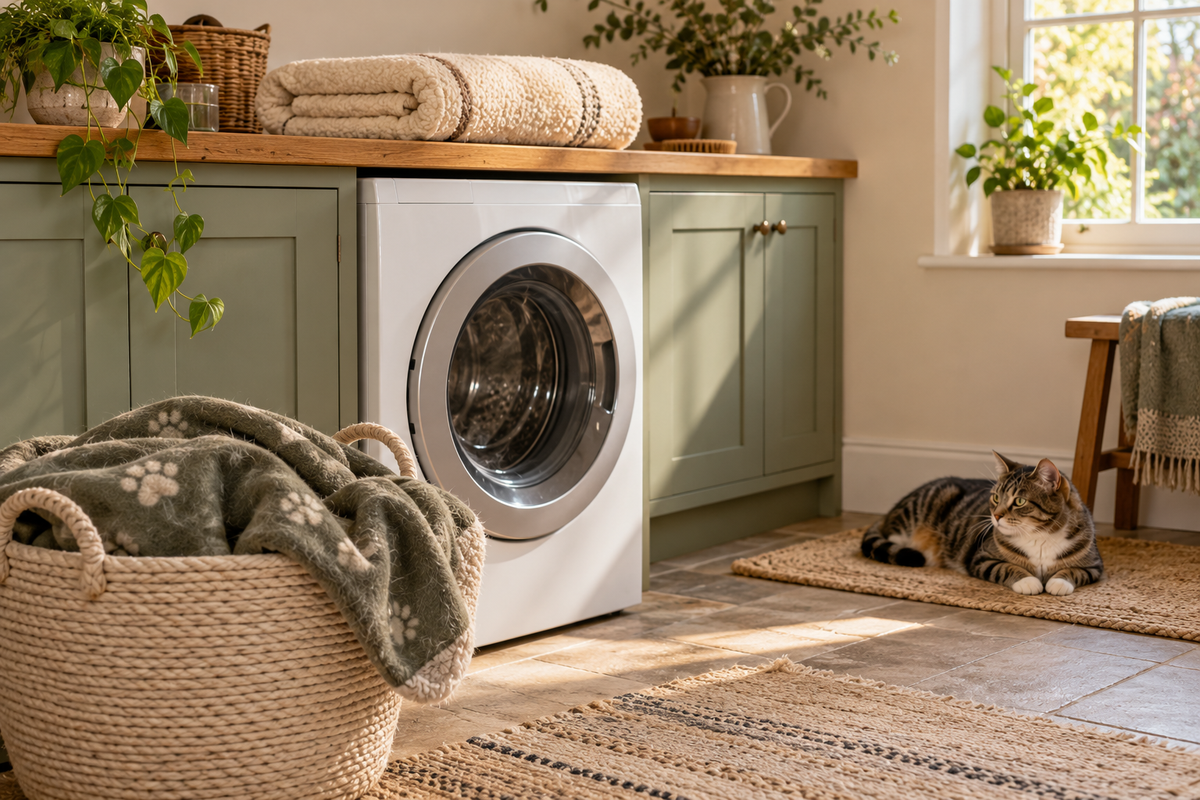
Remove loose fur with a method the fabric allows, then wash and dry the blanket according to its own care label. There isn't one temperature or cycle that suits every pet throw, especially when it has a backing or several layers.
Read the washing and drying instructions separately
Find the sewn-in label before you put the blanket in the basket. Read the directions for drying as well as washing; permission to machine-wash doesn't automatically mean permission to tumble-dry. Whirlpool's blanket-care guidance makes the fabric label the starting point for both decisions.
If the label uses GINETEX symbols, the number inside the wash tub gives a maximum temperature in Celsius. A bar underneath calls for a milder process. For example, a 30°C marking means you shouldn't exceed 30°C; it doesn't mean a 30-minute programme. A crossed-out tumble-drying symbol rules out the dryer. GINETEX explains these symbols in its care guide, linked below.
A missing label needs a question to the maker. Save a clear photo of the instructions once you have them, particularly if several similar throws need different care.
Lift the blanket without spreading fur around the room
Bring the laundry basket to the resting spot and fold the used side inward as you lift the blanket. That gives you somewhere to put it straight away, instead of leaving it on a clean chair while you fetch supplies.
Before washing, gather loose hair using a method that suits the fabric. If you use a reusable roller, check its directions and try a hidden patch with light pressure. Stop if the surface catches or the pile changes. A brush that suits a tightly woven cushion may pull at a loose knit. Empty collected fur into the bin and check the blanket for damaged seams before loading it.
Give the load room and measure the detergent
Check your washing-machine manual for its loading limits and guidance on bulky items. Whirlpool advises loading blankets evenly and avoiding an overloaded drum. If a large throw won't fit within your machine's instructions, arrange a suitable larger machine or ask a laundry service about the item.
Choose the cycle and temperature from the blanket label, then follow the detergent's dosing instructions for that load. Don't add extra detergent simply because the blanket belongs to a dog. The CDC's guidance for soft pet supplies includes ordinary laundry detergent and a cycle appropriate to the fabric. Treat stains only with a method the blanket maker permits; inspect an unfamiliar mark before reaching for another cleaner.
Allow enough time for the blanket to dry
Work out where the blanket will dry before starting the wash. A large throw can occupy the only airer in a small flat, while a layered cover may need more attention than a thin towel.
Use a tumble dryer only when the label allows it, at the permitted setting. If the instructions call for flat drying, use a suitable flat surface instead of hanging the blanket over a narrow rail. Check folds and edges before putting it back on the sofa, and leave it to dry further if any part still feels damp.
Clean the dryer's lint screen as its manual directs. Follow the washing-machine instructions for checking the door seal or cleaning accessible filters; don't dismantle appliance parts to chase a few remaining hairs.
Use a washing routine that responds to actual mess
The CDC includes weekly cleaning of pet beds and blankets in its example schedule, with more frequent cleaning when items look dirty or smell bad. That gives you a starting point, rather than a reason to leave a soiled blanket until laundry day.
Routine cleaning and disinfection have different purposes. The CDC says cleaning is usually enough for most pet items, while illness or certain household circumstances can call for extra precautions. If that applies at home, ask your vet which method suits the situation and the textile. Don't assume a low-temperature wash disinfects a blanket, or override its care limits with a hotter cycle.
Choose the next throw around your laundry space
Check the care information before buying a replacement. A blanket needs to cover the resting area and fit the washing and drying space you actually have. Measure both, and ask for the exact version's instructions if the listing only says washable.
Pawsstead's Pet Throw page brings the product views and general care notes together. Use the instructions supplied with the particular blanket for its washing settings; the photographs don't establish them. Keep a dedicated pet towel for the wet walk home, with a separate place for it to dry. If laundry regularly leaves the sofa uncovered, consider a second compatible throw so one can stay in use while the other dries.
Related essentials
Sources and further reading
- Whirlpool: washing and drying blankets, care labels and loading
- GINETEX: washing temperatures, care symbols and drying instructions
- CDC: cleaning pet blankets, laundry detergent and cleaning frequency
Image: AI-generated lifestyle illustration; not a product photograph or cleaning test.