Clean-Home Journal · October 23, 2026
How to remove pet hair from carpets and sofas
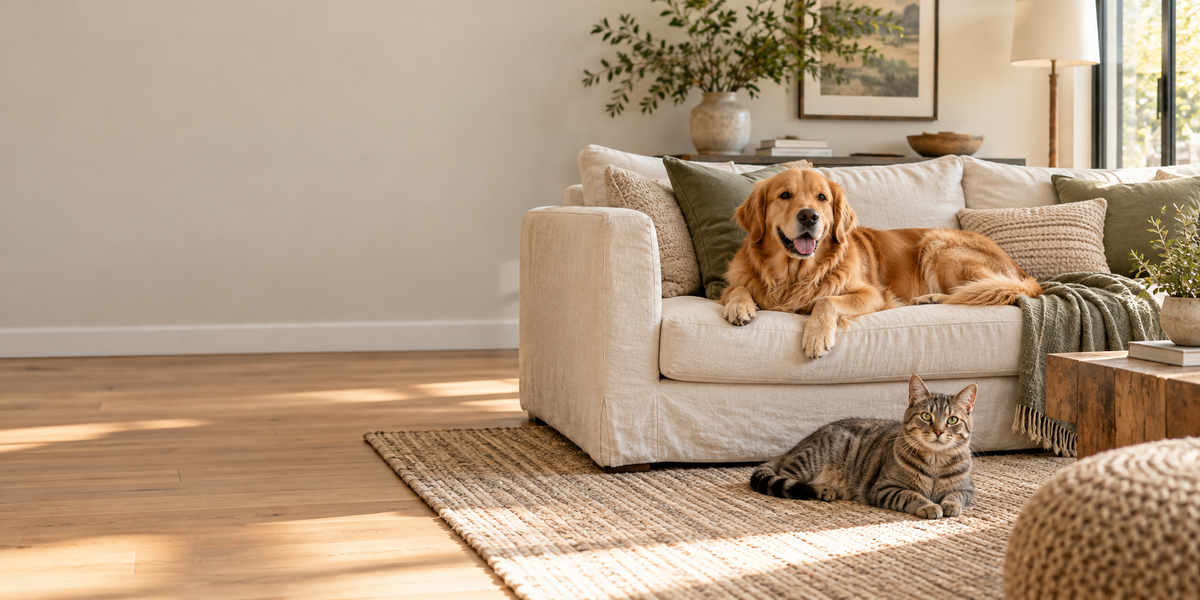
Fur shows up in the sofa seams, along the rug edge and on the cushion your dog always chooses. Start with the fabric care instructions, then work through one small area at a time.
Read the label before reaching for a tool
A carpet and a sofa can look similar while needing different care. Find the manufacturer's guidance for each surface, including restrictions on brushes, moisture and vacuum attachments. If you rent a furnished home, ask for that information before experimenting. A loose weave, raised loop or worn seam deserves particular care because a tool can catch it.
IKEA's upholstery guidance recommends following the furniture's care instructions and testing unfamiliar cleaning methods somewhere inconspicuous. Treat that as the starting point for any new fur-removal tool. A claim that a brush works on fabric doesn't tell you how it will behave on your fabric.
Give loose hair somewhere to go
Remove washable throws and cushions only when their care labels allow it. Fold a hairy throw inward as you lift it, so you aren't dragging loose fur across the seat you've just cleared. Put it straight into a suitable laundry basket rather than leaving it on another chair.
Use the vacuum attachment recommended for your upholstery or carpet. Work slowly around the places you can actually reach, following the appliance and furniture instructions. Stop if the fabric pulls, a loose thread catches or the attachment feels too aggressive. For fitted carpet, check the carpet maker's advice about brush bars and pile direction instead of assuming the strongest setting gives the best result.
Try a small patch before doing the whole room
A reusable roller can be useful on a compatible sofa, while a rubber broom may suit a compatible carpet. These tools have different surfaces and motions, so read their own instructions as well. Start with light pressure on a hidden patch and inspect it in good light. You're checking for pulled loops, roughened fibres or a change in appearance.
If the patch looks unchanged, continue in small sections and collect the fur as you go. Empty the roller compartment before it becomes packed. A mitt also needs its own compatibility check; don't use a household fabric tool on your pet simply because the packaging mentions pet hair.
Keep washing separate from fur removal
Removing hair doesn't tell you how to treat a stain. Adding water, detergent or a homemade mixture introduces a different cleaning method, with its own restrictions. Follow the surface's care label and seek the manufacturer's advice for an unfamiliar stain.
A removable throw can make the everyday job easier, provided its size and care requirements fit your routine. Check the washing instructions before choosing one. Our draft pet throw still needs sample confirmation, so we haven't tested its waterproofing or published final washing directions.
Make the next clean easier to start
Keep the compatible tool close to the place that needs it, such as a cupboard near the living room. Pick a manageable area for a quick tidy, then leave the larger clean for a time when you can move cushions and reach the edges. There isn't a single cleaning frequency that suits every home.
Before buying, compare the tool's intended surfaces, size and care instructions with what you already own. If your current vacuum and a washable cover handle the job comfortably, you may only need a small brush for the remaining corners.
Related essentials
Sources and further reading
Image: AI-generated lifestyle illustration; not a product test.