Clean-Home Journal · October 23, 2026
How to measure your back seat for a dog cover
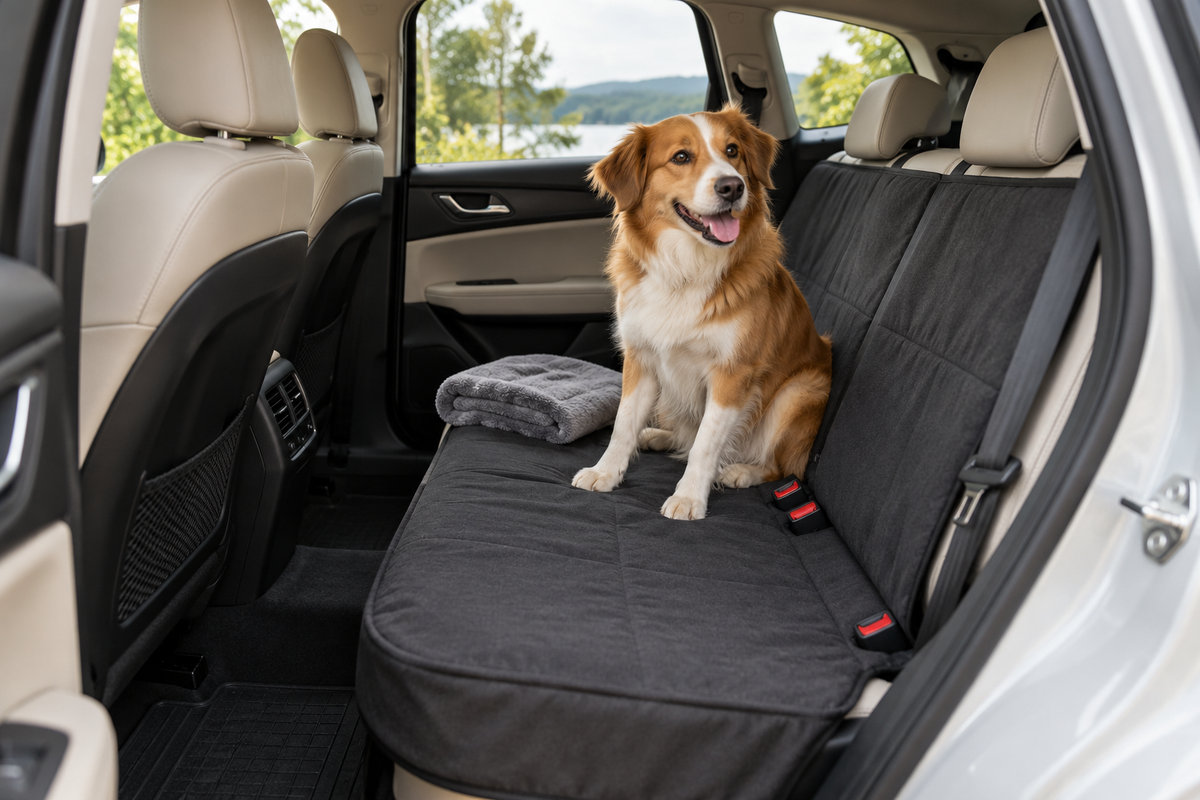
A rear-seat cover needs to fit around the parts of the car you still have to use. Measure the seat, check the buckle openings and look at the attachment instructions before choosing one.
Measure the area the cover needs to reach
Park safely and measure the usable width of the rear seat. Then check the depth of the cushion and the height the cover needs to reach along the seat back. Note the location of buckles, headrests and split-folding sections. Keep those measurements together so you can compare them with a product diagram.
Check what the seller means by width and length. A flat cover's dimensions may include the material that hangs over an edge; they don't necessarily describe the area that rests on the seat. Package dimensions won't answer the fit question either. Ask for a clear product measurement if the listing leaves this unclear.
Read the attachment instructions
Look at how the cover fastens and whether your car has the required attachment points. Headrest shapes and rear-seat layouts vary. A photograph of the cover in another vehicle can't confirm the fit in yours.
Check access to the buckles you need, and follow your vehicle manufacturer's guidance about airbags and seat mechanisms. Don't cover or obstruct equipment that must remain available. If you use a child seat or another passenger shares the back seat, check the instructions for all the equipment involved rather than assuming a slit or zip makes the combination suitable.
Keep restraint requirements separate
A seat cover provides a layer over upholstery. It doesn't establish how to restrain your dog and isn't evidence of crash protection. Choose an appropriate restraint separately and follow its installation instructions.
For UK drivers, Highway Code Rule 57 says animals should be suitably restrained so they cannot distract the driver or injure anyone during a sudden stop. Its examples include harnesses, carriers, cages and guards. U.S. requirements can vary by location; check the rules that apply to your trip and the instructions for the restraint you choose. The lifestyle image on this page shows a parked car, not a recommended arrangement for driving.
Check cleaning requirements before buying
A cover that fits still needs to fit your washing routine. Confirm whether the selected version allows machine washing, hand washing or surface cleaning, and check its drying instructions. Remove loose fur only with a method that suits the material.
Keep a dedicated towel ready for a wet walk so you have somewhere appropriate to put it after use. When removing the cover, gather it inward to contain loose dirt, provided you can do so without damaging its attachments. Take it out of the car before emptying debris, and follow the care label for the remaining clean.
Compare the selected version, not the headline
Our proposed rear-seat cover has supplier-listed dimensions of about 130 × 145 cm, or 51 × 57 inches. We still need to confirm the final variant, attachment details and care label. We haven't tested its waterproofing, fit or durability, and we don't describe it as a safety restraint.
Before ordering any cover, match the actual size and fastening method to the notes you took in the car. Keep the vehicle instructions handy for a final check after fitting. If access, fit or compatibility remains uncertain, resolve that question before using it on a journey.
Related essentials
Sources and further reading
Image: AI-generated lifestyle illustration; not a product test.